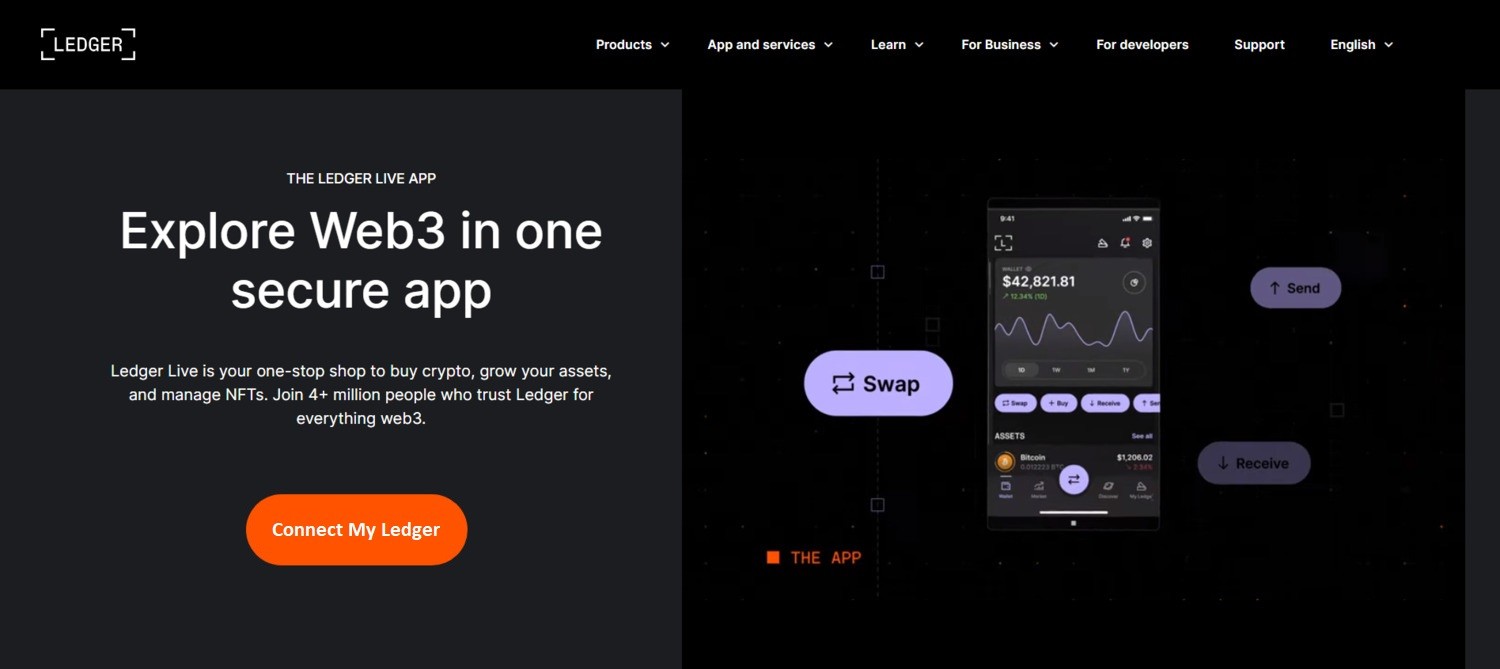
🔐 Ledger Login: Building Unbreakable Trust in Crypto Authentication 🛡️
As cryptocurrencies become an essential part of the global financial system, the way users protect access to their digital assets must evolve. Billions of dollars’ worth of crypto have been lost—not due to blockchain failures, but because of weak login security. Password leaks, phishing scams, fake websites, and compromised devices continue to exploit traditional authentication methods.
This reality has given rise to Ledger Login, a hardware-based authentication system designed specifically for crypto users who demand the highest level of security. Ledger Login replaces outdated login practices with a model that relies on cryptographic verification and physical confirmation.
In this comprehensive article, we explore Ledger Login in detail—how it works, why it matters, how to use it safely, and how it fits into the future of Web3 identity.
🌍 What Is Ledger Login?
Ledger Login is a secure authentication mechanism that allows users to log in to crypto platforms, decentralized applications, and blockchain services using a Ledger hardware wallet. Instead of entering passwords or verification codes, users authenticate themselves by approving a cryptographic request directly on their Ledger device.
This ensures:
Full control over login authorization 🔑
Elimination of password-related vulnerabilities
Protection against phishing and spoofed websites
Hardware-backed confirmation for every login
Ledger Login acts as a digital key, not a set of credentials.
🧠 Why Traditional Login Methods Fail in Crypto
Most login systems were built for email and social media—not for protecting irreversible financial assets.
❌ Weaknesses of Conventional Logins:
Password reuse across platforms
Centralized databases that can be breached
Phishing emails and fake websites
Malware capturing keystrokes
SMS-based 2FA vulnerabilities
Once credentials are compromised, attackers can drain crypto wallets instantly.
✅ Ledger Login Changes the Game
Ledger Login removes passwords entirely and requires physical ownership of the hardware wallet, making remote attacks nearly impossible.
🔐 The Security Philosophy Behind Ledger Login
Ledger Login is built on three fundamental pillars:
🛡️ Hardware Isolation
Private keys are generated and stored inside a Secure Element chip, never exposed to the internet.
🔑 Cryptographic Proof
Login authorization is proven mathematically, not through shared secrets.
👆 Physical Confirmation
Every login requires manual approval on the Ledger device itself.
This design ensures that even if your computer is compromised, your crypto remains protected.
⚙️ How Ledger Login Works Step by Step
Ledger Login uses asymmetric cryptography, the same principle that secures blockchain transactions.
🔄 Authentication Flow:
A supported platform requests authentication
A cryptographic challenge is generated
The Ledger device signs the challenge internally
The signed response is returned
The platform verifies the signature
Secure access is granted ✅
🔒 At no point does the private key leave the device.
🖥️ Ledger Devices That Support Ledger Login
Ledger Login is compatible with several Ledger hardware wallets, including:
Ledger Nano S Plus
Ledger Nano X
Ledger Stax (supported platforms)
Each device includes a Secure Element chip, certified to protect against physical tampering, malware, and extraction attempts.
📲 Ledger Login and Ledger Live: How They Work Together
Ledger Live is the official software that connects Ledger hardware wallets to computers and mobile devices.
🔧 Ledger Live Functions:
Secure communication between device and platform
Authentication request handling
Blockchain app management
Device verification
Firmware and security updates
Ledger Login often relies on Ledger Live as a trusted interface, ensuring secure data exchange.
🌐 Ledger Login in Web3 Applications
Ledger Login is widely adopted across the Web3 ecosystem.
🚀 Common Web3 Use Cases:
Decentralized finance (DeFi) platforms
NFT marketplaces 🎨
DAO governance portals
Blockchain gaming environments 🎮
Cross-chain bridges
Each action must be confirmed on the device, preventing unauthorized interactions.
🆚 Ledger Login vs Software Wallet Authentication
FeatureLedger LoginSoftware WalletKey StorageHardware-basedDevice memoryPhishing ResistanceVery HighModeratePhysical ConfirmationRequiredNot requiredMalware ProtectionStrongLimitedCentralized DependencyNoneSometimes
Ledger Login significantly reduces attack surfaces.
🪜 How to Use Ledger Login Safely
🟢 Step 1: Initialize Your Ledger Wallet
Set a strong PIN
Record your recovery phrase offline 📝
Store it in a secure location
🟢 Step 2: Install Ledger Live
Download from official sources
Verify device authenticity
Update firmware
🟢 Step 3: Authenticate Using Ledger Login
Visit a supported platform
Choose “Login with Ledger”
Unlock your device
Approve the request on the device screen
🎉 Secure access achieved—no passwords required.
⚠️ Critical Security Mistakes to Avoid
Even the most advanced security can fail if misused.
🚫 Never:
Share your recovery phrase
Enter recovery words online
Approve login requests blindly
Use unofficial Ledger software
Connect to unknown platforms
Ledger Login protects your crypto—but your behavior matters.
🧯 Troubleshooting Common Ledger Login Issues
❓ Device Not Recognized
✔ Try a different USB cable
✔ Restart Ledger Live
✔ Update firmware
❓ Login Prompt Not Displayed
✔ Open the correct blockchain app
✔ Refresh the page
✔ Reconnect the device
❓ Browser Issues
✔ Use Chrome, Brave, or Edge
✔ Allow hardware access permissions
🕶️ Ledger Login and User Privacy
Ledger Login is designed with privacy in mind.
🔐 Privacy Benefits:
No email or phone number required
No centralized identity database
No tracking cookies
Anonymous cryptographic verification
You authenticate ownership—not identity.
🏢 Ledger Login for Businesses and Advanced Users
Ledger Login is increasingly used by professionals and organizations.
💼 Use Cases:
Crypto investment funds
DAO treasury access
NFT creators and studios
Web3 startups
Blockchain developers
Advanced configurations may include multi-signature wallets, layered approvals, and institutional security models.
🔄 Ledger Login vs WalletConnect
FeatureLedger LoginWalletConnectAuthentication TypeHardware-basedApp-basedPhishing ResistanceVery HighModeratePrivate Key ExposureNeverWallet-dependentConfirmation MethodPhysical deviceMobile approval
Ledger Login provides stronger guarantees through mandatory hardware interaction.
🔮 The Future of Ledger Login
Ledger Login is expected to evolve alongside blockchain adoption.
🚀 Future Enhancements:
Improved mobile login support 📱
Cross-chain authentication
Multi-device verification
Biometric-assisted confirmation
Enterprise-grade integrations
Ledger aims to establish Ledger Login as a universal hardware-backed digital identity standard.
❓ Frequently Asked Questions
❓ Is Ledger Login secure?
Yes. It uses hardware isolation and cryptographic verification.
❓ Does Ledger Login require internet access?
Yes, but private keys remain offline.
❓ Can Ledger Login be hacked?
It is extremely resistant when used correctly.
❓ What happens if my Ledger device is lost?
You can restore access using your recovery phrase on a new device.
🏁 Final Conclusion: Why Ledger Login Matters More Than Ever 🏆
In today’s threat-filled digital environment, secure authentication is no longer optional—it is essential. Ledger Login represents a major leap forward, eliminating passwords, reducing centralized risks, and empowering users with true control over their digital assets.
Whether you are holding crypto long-term, actively trading, or building in Web3, Ledger Login provides confidence, resilience, and peace of mind.